18 Mar, 2026
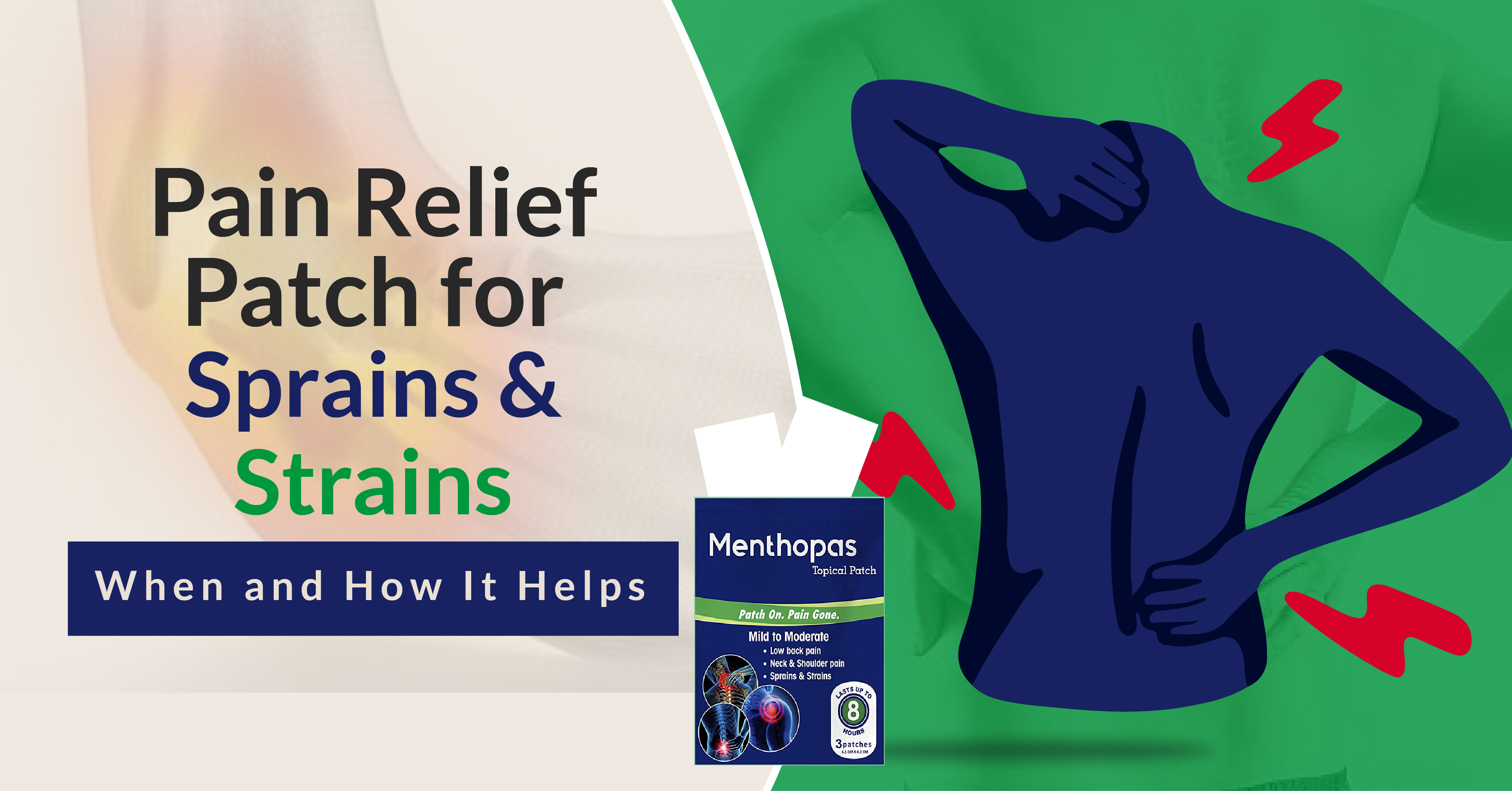
Pain Relief Patch for Sprains & Strains: When and How It Helps
Sprains and strains are among the most common musculoskeletal injuries, affecting people of all ages - from office workers and gym-goers to athletes and older adults. While rest and physiotherapy play a key role in recovery, using a pain relief patch for sprains and strains has become a popular, non-invasive way to manage discomfort and improve mobility during healing.
This guide explains when pain relief patches help, how they work, and how to use them correctly for safe, targeted muscle and joint relief.
What Are Sprains and Strains? Understanding the Difference
Although often used interchangeably, sprains and strains affect different tissues.
What is a Sprain?
A sprain occurs when ligaments - the tough tissues connecting bones - are overstretched or torn. Common areas include:
- Ankles
- Knees
- Wrists
What is a Strain?
A strain involves muscles or tendons and is usually caused by overuse or sudden movement. It commonly affects:
- Lower back
- Hamstrings
- Neck and shoulders
Both conditions cause pain, swelling, stiffness, and limited movement - making muscle pain relief essential during recovery.
Why Sprain and Strain Pain Often Lingers
Pain from sprains and strains doesn't always disappear quickly because:
- Inflammation restricts blood flow
- Muscle fibres take time to repair
- Repeated movement slows healing
- Poor posture or early activity worsens injury
This is why topical pain relief methods, such as patches, are often recommended alongside rest and rehabilitation.
How a Pain Relief Patch Helps with Sprains & Strains
A pain relief patch delivers active ingredients directly to the affected area, offering localised relief without stressing the digestive system.
Key Benefits of Using a Pain Relief Patch
- Targeted muscle pain relief at the injury site
- No oral medication burden on the stomach
- Continuous relief for several hours
- Easy to use during daily activities
- Suitable for back pain, knee pain, and joint pain
This makes patches a preferred option for people looking to reduce reliance on pain pills.
Heat vs Cooling Action: Which Works Best for Sprains and Strains?
Choosing the right therapy depends on the stage of injury.
Cooling Therapy (Acute Phase)
Best used within the first 24-48 hours:
- Reduces swelling and inflammation
- Numbs sharp pain
- Helpful for sudden injuries
A cooling pain patch for muscle pain with menthol creates a soothing sensation that calms irritated tissues.
Heat Therapy (Recovery Phase)
Ideal after swelling subsides:
- Improves blood circulation
- Relaxes stiff muscles
- Supports tissue repair
Many modern patches combine menthol and camphor, offering a balanced cooling-warming effect suitable for daily use.
When Should You Use a Pain Relief Patch for Sprains & Strains?
You can use a sprain pain relief patch or strain pain relief patch when:
- Pain limits movement
- Swelling has stabilised
- You need non-drowsy pain relief
- Oral painkillers are not ideal
In India, topical patches are commonly used for back pain relief, knee pain treatment, and joint pain relief, especially among working adults.
How to Use a Pain Relief Patch Correctly
Step-by-Step Guide
- Clean and dry the affected area
- Remove the protective liner
- Apply the patch directly over the pain site
- Press gently to ensure full contact
- Leave on for the recommended duration
Avoid applying patches on broken or irritated skin.
What Ingredients to Look for in a Pain Relief Patch
Clinically trusted ingredients include:
- Menthol -Provides cooling relief and reduces pain signals
- Camphor - Improves circulation and relaxes muscles
- Herbal extracts - Support natural recovery
These ingredients are commonly used in topical pain relief patches designed for muscle and joint discomfort.
| Feature | Pain Relief Patch | Pain Pills |
|---|---|---|
| Application | External | Internal |
| Side effects | Minimal | Possible gastric issues |
| Relief area | Localised | Whole body |
| Duration | Continuous | Short-term |
This comparison explains why many people switch to pain patches for muscle pain during recovery.
Are Pain Relief Patches Safe for Daily Use?
When used as directed, pain relief patches are generally safe. However:
- Do not exceed recommended usage
- Consult a doctor for chronic pain
- Avoid use on sensitive skin without testing
In India, most patches comply with topical safety guidelines, making them suitable for regular, short-term use.
FAQs: Pain Relief Patches for Sprains & Strains
Can a pain relief patch help heal sprains faster?
A patch relieves pain and improves comfort, allowing better movement, which indirectly supports recovery.
How long should I use a pain relief patch?
Most patches provide relief for several hours. Follow product instructions.
Is a pain relief patch better than ice packs?
Patches are more convenient for extended relief, while ice packs are best immediately after injury.
Can I use a patch for knee or back sprains?
Yes, patches are commonly used for back pain relief and knee pain treatment.
Can older adults use pain relief patches safely?
Yes, especially when avoiding oral painkillers.
Final Thoughts: Managing Sprain & Strain Pain Effectively
Sprains and strains may be common, but persistent pain shouldn't be ignored. A pain relief patch for sprains and strains offers a practical, targeted way to manage discomfort while supporting everyday mobility.
When combined with rest, proper movement, and medical advice when needed, topical patches can be a reliable part of a balanced pain-management approach.
If you're exploring topical pain relief options, understanding how patches work helps you make informed, confident choices for muscle and joint care.